Dent Removal Solutions: Professional Auto Body Repair Methods
In the context of vehicle exterior repairs, understanding the categories of damage is essential to properly handling your vehicle's problems. Aesthetic issues, such as dents and scratches (categorized as Category N), influence aesthetics but not safety. Structural problems (designated as Category S) demand urgent handling as they compromise roadworthiness. Recognizing these designations helps determine restoration needs and expense forecasting. Properly addressing these repairs reduces the risk of ongoing issues, safeguarding safety standards and regulations. Routine assessments and expert assessments are crucial for protecting your vehicle's integrity and value. If you're keen to discover detailed options and obtain knowledge about maintaining sustained automotive performance, you'll discover helpful resources in the following sections.
Essential Points
- Exterior services include scratch repairs, dent elimination, and paint restoration to improve appearance.
- Structural repairs address frame straightening and alignment to ensure safe vehicle operation.
- Non-structural damage restoration improve visual appearance without affecting vehicle functionality.
- Timely exterior repairs stop additional damage and protect your investment.
- Skilled inspection ensures accurate damage assessment and proper repair solutions.
Understanding Professional Auto Exterior Services
When it comes to understanding professional auto exterior services, it's crucial to be aware of how various forms of damage impact both the vehicle's performance and looks.
Damage is typically categorize automotive damage into four primary categories: Categories N, S, B, and A.
Category N covers superficial damage including small dents or scratches that won't impact structural integrity. These problems are readily fixed to return the vehicle's visual appearance.
Category S relates to structural damage demanding significant repairs to ensure safety and roadworthiness. This damage category must be addressed immediately to avoid further deterioration.
Category B indicates vehicles that are no longer operational again due to major problems, yet still have salvageable parts. These parts can be reused, providing some value even when the vehicle itself is unsalvageable.
Category A signifies complete loss, where the vehicle is completely damaged and isn't suitable for parts, resulting in complete scrapping.
Understanding these categories aids in determining the appropriate measures for fixing or salvaging.
Working with professionals provides accurate damage evaluation and proper repair classification, preserving your vehicle's worth and security by maintaining its structural integrity and appearance.
In-Depth Manual for Exterior Repair Services
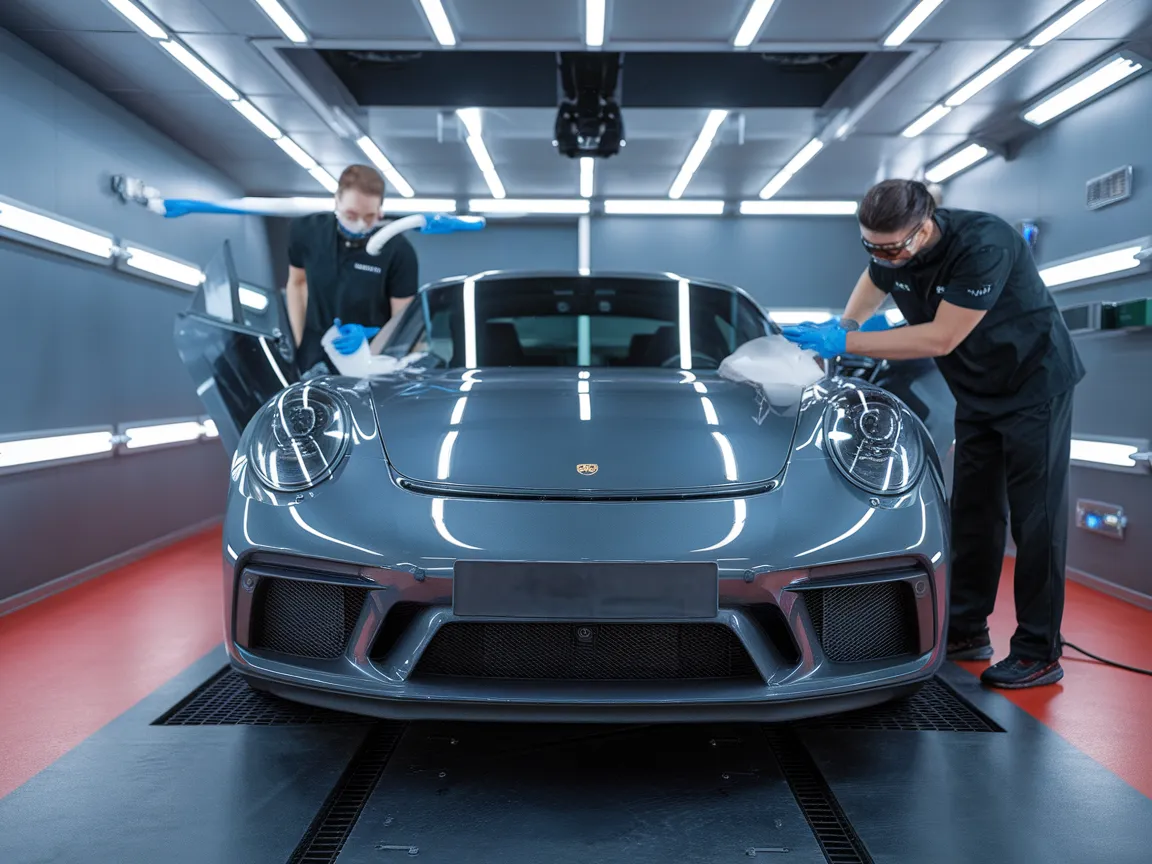
When handling exterior repair services, you need to pay attention to key aspects of paint repair and refinishing, together with multiple options for removing dents and scratches such as PDR methods.
Grasping the intricacies of window repair and replacement is crucial, particularly when assessing types of damage and selecting glass requirements.
Paint Repair and Refinishing
All car owners eventually faces the need for paint repair and refinishing to maintain their car's aesthetic and safeguard the outer surface. This comprehensive procedure consists of various phases, all crucial for creating a perfect result.
Initialize with paint correction, a professional technique that corrects surface defects like surface marks and weathering, bringing back the car's natural luster.
Proper surface prep is crucial. Sanitize and decontaminate the vehicle meticulously and protect unpainted sections to avoid unwanted overspray.
The paint application consists of three phases: primer, base coat, and clear coat. The primer establishes the groundwork, the base coat adds the color, and the clear coat provides protection and luster.
Expert color blending is essential for flawless color transition. This technique involves feathering new paint into neighboring sections, producing a seamless transition.
Inspect for quality control at multiple phases, checking paint uniformity, color matching, surface finish, and blend quality.
Fixing Car Dents and Scratches: Your Options
Getting rid of troublesome dents and scratches on your automobile doesn't have to be an intimidating task. With proper techniques, you can tackle minor damage using do-it-yourself techniques.
For surface scratches, try applying whitening toothpaste with a microfiber applicator in circular motions to minimize their appearance. For deeper scratches, a specialized scratch removal kit can offer a more professional finish.
Regarding minor dents, common household tools can be unexpectedly helpful. A plunger along with water can remove small dents through suction, while boiling water can make plastic panels more pliable for easier manipulation.
Alternatively, purpose-built suction cup dent removal tools offer greater precision.
For larger damage, expert solutions may be necessary. Paintless dent removal is a budget-friendly method that maintains your car's original paint without requiring color matching.
Mobile technicians can deliver convenience by bringing qualified technicians to your location for quick fixes. For significant dents, body repair materials are used but require proper surface preparation and professional painting afterward.
When scratches penetrate the metal, professional touch-up services ensure proper color matching and protection with multiple protective layers.
PDR Methods and Applications
Paintless Dent Repair (PDR) represents a revolutionary method within exterior vehicle repairs, offering an efficient solution to address minor damage while maintaining your vehicle's initial paint finish. Understanding PDR's fundamental techniques allows you to successfully rejuvenate your vehicle's appearance.
The traditional push approach remains a fundamental aspect of PDR, in which technicians reach dents from the reverse side of the panel, using precision tools to carefully shape the metal back to its original form. When direct access isn't possible, pull technique becomes essential. This technique requires adhesive tabs that secure to the dent's surface, enabling specialists to pull the panel back to its natural contour.
When necessary, heat shrinking is applied, working with a professional heat gun to heat and cool the metal, effectively removing imperfections.
PDR excels at addressing storm damage, door dings, and linear deformations, rendering it adaptable for numerous scenarios. It protects the factory paint job, delivers quicker turnaround times, and stays more economical versus standard body work.
However, PDR won't work for sharp or deep dents or spots with broken paint. Excelling at PDR demands technical expertise, deep knowledge of metal behavior, and skill with specialized tools.
Auto Glass Replacement and Repair
Automotive glass repair and replacement represents a vital aspect of automotive care that guarantees both safety and visibility. Knowing the different services is vital.
When dealing with small issues, minor glass repair requires introducing a professional-grade resin to preserve the glass's durability and transparency. This economical method usually requires less than one hour. However, when damage is extensive, a total windshield replacement must be performed. The old windshield gets extracted, and a fresh one conforming to safety standards is fitted.
In addition to windshields, professional services also handle rear and side windows, including all vehicle window types. Get professional assistance promptly for chips larger than a quarter, cracks in your line of sight, several damage points, or peripheral damage.
Modern vehicles often need ADAS calibration following replacement to guarantee safety feature operation. Specialists offer thorough evaluations and use high-grade materials for enduring repairs. Many offer mobile services for customer convenience.
When choosing a provider, consider their expertise, service offerings, customer reputation, credentials, and warranties.
To minimize damage, keep a safe distance from other vehicles, examine your glass regularly, and fix minor issues quickly.
Cost considerations include vehicle type, required glass, damage severity, features, and insurance.
Vehicle Trim and Molding Care
While maintaining the integrity of your vehicle's glass is essential for safety, it's equally important to consider the exterior trim and molding, which boost both visual appeal and practical function.
The trim on your vehicle comprises different elements like front grilles, side moldings, and rear spoilers. These parts aren't just decorative; they protect critical areas and enhance vehicle airflow.
Frequent trim concerns involve cracking, fading, and detachment. For synthetic trim pieces, restoration requires cleaning and surface conditioning, and utilizing specific repair compounds to fix breaks. Proper finishing and texturing ensure a flawless look.
For weathered trim pieces, a comprehensive smoothing followed by the application of a suitable coating restores their original shine.
Professional services deliver complete solutions, evaluating damage and employing material-specific techniques. They ensure precise color coordination and rejuvenation, with a comprehensive evaluation to verify quality. Many providers even provide on-site assistance, bringing convenience right to your doorstep.
To maintain your trim, perform routine cleaning and protect it from severe weather. Promptly address any damage.
Consider replacement if repairs are too significant or restoration expenses surpass replacement costs. Proper maintenance and repair guarantee your vehicle stays attractive and maintains its worth.
Advanced Auto Body Repair Solutions
For professional auto body repair work, you can leverage innovative systems such as SMART repair technologies that efficiently handle minor issues.
Automated color matching delivers exactness in paint finishing, while digital scanning provides the exactness required in exact repairs, while advanced frame straightening equipment guarantees structural stability.
Furthermore, implementing sustainable repair approaches enables you to decrease your carbon footprint while maintaining high repair standards.
Innovative Repair Technical Innovations
Advanced Repair Technology has transformed vehicle repair methodology, targeting specific repair sections without demanding extensive panel replacements or complete repainting.
This innovative approach utilizes precision instruments including precision equipment and panel aligners, permitting precise handling of exterior damage. There's no need for panel dismantling, greatly minimizing repair times, usually finishing work in just one day.
This technology uses innovative coating and material systems to provide flawless matching with the original paint finish. This covers accounting for environmental effects and aging, guaranteeing exact finish alignment.
This technology substantially decreases expenditure by optimizing service time, parts needs, and material requirements, leading to reduced repair duration.
The system is optimal for addressing small dents, paint damage, bumper repairs, wheel refinishing, and minor collision damage.
Using artificial intelligence and computerized systems, technicians can deliver superior precision and reliability, specifically in finish application and final detailing.
Moreover, SMART repair is environmentally responsible, decreasing material waste and energy usage while reducing use of chemicals.
Digital Color Analysis
While investigating the realm of SMART Repair Technology, a crucial advancement in the auto repair industry is computer-aided color matching. This state-of-the-art technology guarantees precise paint matching, doing away with the guesswork found in traditional approaches.
The process begins with a spectrophotometer, a sophisticated device that precisely analyzes the vehicle's paint. By measuring color characteristics, it produces a complete digital color signature.
After the data is collected, specialized software analyzes it against a vast paint formula database. The system takes into account variables like paint formulation, aging, light exposure, environmental exposure, and metallic flake attributes. This assessment produces an accurate color formula, ready for precision mixing.
The digital mixing system follows, exactly measuring pigments for a flawless match. This approach guarantees consistency, removing human error and reducing paint waste.
You'll discover this method improves accuracy, delivering seamless repairs indistinguishable from the original finish. Quick processing is an additional benefit, as the system minimizes the time necessary for color matching, improving both cost and quality.
3D Scanning Technology in Precision Repairs
Leading the way of automotive repair, 3D scanning technology offers exceptional precision in analyzing and organizing repairs. This sophisticated technique utilizes infrared lasers to capture detailed point clouds, accumulating millions of measurement points just millimeters apart from multiple distances. These detailed measurements generate a comprehensive digital model of your vehicle, facilitating precise damage assessment and repair planning that matches exactly with factory specifications.
In practice, 3D scanning is superior at detecting subtle damage frequently overlooked during manual examination. By identifying deformations as small as fractions of a millimeter, this technology ensures a complete analysis, leaving no room for oversight.
You'll notice that the scanning process not only measures surface deviations but also assesses structural damage and records repair progress with remarkable clarity.
The merits for auto body shops are considerable. With increased precision, 3D scanning removes guesswork by providing exact measurements and detailed surface analysis, producing more accurate repairs.
Performance is enhanced as it decreases measurement time, enables precise damage assessment, and reduces rework. Whether you're engaged in historic automobile renovation or custom modifications, 3D scanning aids your work by guaranteeing parts fit exactly and satisfy quality standards, optimizing the entire process.
Advanced Frame Straightening Equipment
Building on the accuracy offered by 3D scanning, modern frame straightening equipment marks a major leap in state-of-the-art auto body repair systems.
At its core, the frame straightening machine consists of a spacious platform with movable towers, enabling you to work on different areas with unmatched flexibility. Precision clamps secure the vehicle, making certain that it stays firmly positioned throughout the repair, which is essential for exact results.
The equipment features computerized measuring systems utilizing sonic and laser capabilities to scan and diagnose frame damage. Technicians can match these measurements against OEM standards, confirming the repairs conform precisely to original standards.
Sophisticated hydraulic systems deliver measured pressure exactly where needed, permitting the execution of gradual adjustments without straining the metal.
The operation initiates with a thorough assessment utilizing these computerized systems to measure damage. After removing damaged components and securing the vehicle, technicians continue with the straightening process.
Precise hydraulic forces and continuous measurement monitoring allow you to reach the required alignment.
Eco-Friendly Repair Solutions
Transforming the auto body repair field, sustainable methods provide a green alternative without compromising quality.
These innovative technologies minimize environmental harm while maintaining high repair standards. A key innovation includes aqueous paint systems, which release minimal VOCs and deliver excellent paint matching and longevity. This approach not only provides a more secure work setting for staff but also supports eco-friendly objectives.
Paintless Dent Repair functions as an additional technique that maintains the original factory finish, reducing waste, and reducing energy requirements.
By utilizing digital assessment systems, you can achieve digital operations, supported by UV curing technology that provides quicker, cleaner repairs. Power-saving tools and lighting systems further improve your shop's sustainability.
Effective material handling is vital, with component recovery programs and the reuse of reclaimed components functioning as a crucial role in minimizing waste.
Programs for metal and plastic recycling, together with responsible management of toxic materials, are essential. Implement waste minimization strategies through efficient material usage planning and recycling packaging materials.
Implementing these sustainable repair practices not only decreases your carbon footprint but also lowers operational expenses, boosts your image, and elevates customer satisfaction, providing benefits positively to ecological preservation and business success.
Financial Management and Insurance Solutions
While overseeing automotive repair costs, initially consult an itemized service manual to prevent surprise charges.
Additionally, you can simplify your insurance claim handling by understanding insurance coverage and deductible choices, that significantly affect personal expenses.
For better decision-making, assess different service proposals and consider financial arrangements or payment schedules that best suit your financial situation.
Detailed Service Pricing Guide
An in-depth service pricing guide is vital for effectively managing auto repair costs and maneuvering insurance claims. To start, note that auto repair pricing mainly involves labor and parts costs. Labor charges utilize standardized time estimates, while parts costs vary based on manufacturing sources and vendor relationships.
Pick from entry-level service plans, initiating at R475 for minor tasks, or complete plans encompassing additional repairs like brake pads.
Several elements impact repair costs, like vehicle make and model, service location, and repair complexity. Premium automobiles and urban service locations usually involve higher costs.
To save money, always obtain multiple quotes, perform regular maintenance, and look for service bundles featuring discounts.
When reviewing quotes, confirm labor charges and estimated completion times are itemized. Parts should be separately itemized with costs, and be aware of supplementary fees like diagnostics.
For customer security, request written estimates, comprehend warranties on parts and labor, and keep all documentation.
Select a service provider with qualified technicians and a proven reputation. Look for transparency in pricing explanations.
Current innovations feature digital estimates and mobile services with straightforward pricing, offering more flexibility and certainty in handling repair costs.
Managing Insurance Claims
Grasping the detailed pricing of auto repairs establishes a basis for effectively managing insurance claims and financial oversight. The claims procedure in the vehicle insurance field is crucial, involving steps from claim initiation to claim settlement.
To begin a claim, notify your insurer promptly, supplying required documents like pictures and incident reports. Insurance companies will verify policy coverage and validity, with claim specialists examining the damage and calculating repair expenses.
Modern technologies streamline this process, making it more efficient. Automation solutions, such as Robotic Process Automation (RPA) and document scanning systems, manage standard procedures and documentation management, minimizing errors and delays.
AI technology is instrumental in analyzing claim submissions and detecting fraud, improving precision.
To improve claims management, focus on integrating advanced technologies that enhance interaction and streamline workflows. Implement mobile-optimized solutions for submitting claims and offer real-time updates through electronic platforms.
Verify routine checks for quality management and consistently evaluate performance for areas of improvement.
Navigating Insurance Coverage and Deductibles
Navigating car insurance policies requires a thorough comprehension of deductibles and coverage options to effectively manage repair costs. Knowing your deductible is essential. It's the out-of-pocket amount you pay before insurance pays for a claim. Standard deductibles range from $0 to $2,000, with $500 being typical.
Choosing a higher deductible decreases your insurance costs, but this results in higher out-of-pocket expenses during repairs. Weigh this against your financial situation and risk appetite.
Examine coverage types diligently. Collision coverage handles crashes with cars or stationary objects and usually features deductibles between $0 to $1,000. Comprehensive coverage covers vandalism, natural disasters, theft, and more, often featuring lower deductibles ranging from $100 and $300.
Many insurance companies offer specific glass coverage with reduced or no deductibles, important if windshield damage is recurring.
Evaluate your backup funds, monetary resources, automobile value, and driving habits when picking a deductible. If repair costs are less than your deductible, avoid filing a claim to stop premium rises.
Financial Solutions for Repairs
When confronted with unplanned car repairs, financing and payment plans can be invaluable tools for handling expenses efficiently. You have several options to evaluate, each with specific advantages.
Bank loans feature systematic repayment plans with set monthly payments, usually varying from $1,000 to $50,000. Rates typically range between 6% and 36%, determined by your financial profile and lending institution. These loans ensure stable repayment terms and are available from banks, credit unions, or online lenders.
Credit cards enable quick access to funds. Numerous cards feature 0% APR introductory periods for 12-18 months, while certain mechanics work with specialized auto repair credit cards like Synchrony Car Care. This proves especially useful if you can pay off the balance during the promotional period.
Numerous service centers now partner with financial institutions to provide direct financing options and adaptable payment options. Major service providers like Firestone, Pep Boys, and Midas commonly offer their own credit lines with competitive terms, often featuring immediate credit decisions.
Alternative payment methods include BNPL platforms like Affirm, Klarna, and copyright's Pay in 4, which let you break down repair costs into smaller payments, often with no interest on brief payment plans. Additionally, some shops offer internal payment plans, letting you break down payments into periodic payments without requiring external financing.
To qualify for most financing options, you typically need to have adult status, possess official identification, prove consistent income, have acceptable credit scores (usually 600+), and show residence verification. Be sure to evaluate rates, terms, and payment plans completely before agreeing to any financing option.
Evaluating Multiple Service Estimates
Obtaining several repair estimates is essential for effectively managing repair costs and ensuring you obtain the most value. Start by collecting at least three estimates to identify a fair price range and recognize differences in service. Every quote must be broken down, listing component prices, labor hours and rates, and additional charges. This allows you to comprehend precisely what's included and provides a solid foundation to compare.
Pay close attention to parts quality and pricing. Various repair centers might utilize factory parts, while others choose aftermarket options. More expensive proposals often reflect higher-quality components, which may warrant the premium for long-term reliability.
Labor costs also differ; a shop with higher rates might have more skilled technicians, possibly reducing your overall spending if they perform the work efficiently.
Review shop credentials, including technical certifications, expertise with your automobile type, and customer testimonials. A clean workshop often suggests high standards.
Use the proposals as leverage to arrange better terms with your chosen facility. Watch out for warning signs like vague estimates or pressure tactics.
In the end, emphasize excellent workmanship and reputable service over merely the lowest price to prevent subsequent problems and ensure satisfaction.
Selecting the Best Auto Body Repair Center
When searching for|In the process of finding} a qualified auto body facility, you'll need to carefully evaluate their professional certifications to confirm compliance with quality standards.
Be sure to inspect the shop's equipment and facilities to ensure they operate state-of-the-art tools that ensures professional repairs.
Furthermore, make sure to thoroughly review client ratings and ask about their expertise and specializations to ensure they can effectively handle your particular {repair requirements|vehicle issues.
Industry Credentials Explained
Picking the ideal auto body shop hinges on knowing the array of industry certifications available. These certifications guarantee that your car undergoes first-rate repairs.
The I-CAR Gold Class certification stands as a benchmark of superiority, requiring yearly training for technicians in damage estimation, structural steel work, cosmetic repair, and painting. This means you're placing your vehicle in the hands of skilled experts.
Moreover, consider the Assured Performance Network certification, achieved by less than 10% of shops nationwide. These facilities go through thorough inspections and follow manufacturer-specific standards, ensuring that repairs use the latest equipment and materials.
If your automobile is a premium or unique model, seek out OEM certifications, which qualify shops to service specific brands. These shops must possess brand-specific training, specialized equipment, and conduct routine facility audits.
Furthermore, ASE Certification from the National Institute for Automotive Service Excellence confirms a technician's skill through detailed testing and hands-on experience.
For service standards, BBB accreditation confirms a shop maintains ethical business principles and maintains transparency.
Before choosing a shop, validate certifications through official websites, request documentation, and examine inspection reports to verify the top standards of repair.
Equipment Standards and Facility Guidelines
Understanding professional certifications is just one consideration when picking the right auto body shop. You also need to examine the equipment and facility standards to secure high-quality repairs.
Begin by verifying if the shop uses sophisticated frame and measuring systems. Look for computerized equipment that deliver exact diagnostics and alignment systems for frame accuracy.
Following that, inspect the paint and refinishing equipment. A modern spray booth with appropriate ventilation is vital, together with industrial-grade application tools and a precise color matching system.
For fabrication work, shops should have specific aluminum repair equipment and spot welding systems.
Shop organization is another key aspect. An efficient workflow with reduced vehicle movement between repair phases shows efficiency. Verify there are well-sized repair bays with sufficient lighting and dedicated stations for paint preparation and mechanical work.
Pay attention to parts and materials management. An well-arranged storage system and designated paint mixing room are essential for smooth operations.
Reading and Understanding Reviews
When selecting a repair facility, it's crucial to investigate the world of reviews to guarantee you're making a smart choice. Initially review review websites like Google, Yelp, and the Better Business Bureau. Google generally provides the most reviews, while the BBB gives insights into business practices and complaint resolution processes.
Social networks like Facebook can provide in-depth reviews with photos, giving a visual representation of the shop's service quality.
Pay attention to review patterns. Consistent themes in positive or negative feedback can suggest reliable trends in service quality. Pay attention to how the shop responds to reviews, especially negative ones. Professional, solution-focused replies show a dedication to customer service.
Watch for red flags such as frequent complaints about delayed repairs, insurance complications, paint inconsistencies, and poor communication. Genuine reviews often describe repair details, contain pictures, and reference specific employees.
Evaluate the overall rating, but focus on recent reviews for present performance. Cross-reference reviews across platforms to verify consistency.
Essential Questions to Discuss
When selecting an ideal auto body shop, it's crucial to ask appropriate questions to ensuring quality repairs and reliable service. Begin with asking about qualifications and experience. Check if the shop maintains I-CAR certification or other recognized credentials. Inquire about technician qualifications and ongoing training programs. When dealing with specialized vehicles, check for manufacturer-specific certifications for your vehicle type.
Then, explore service and warranty specifics. Ask for an explanation of their quotation procedure and make sure they provide written estimates. Verify the types of parts they use: factory, alternative, or pre-owned parts. Make certain they've thorough paint matching procedures and superior quality controls. Be sure to ask about warranty coverage for materials and workmanship, including the terms and extent of protection. Clarify their approach for resolving any post-repair issues.
Think about practical aspects like scheduling and timing. Discuss expected turnaround times and inquire about security measures for vehicles on their lot. Determine if they include transportation options such as rental cars or loaners. Verify if they work directly with insurance companies and their payment options.
A reputable shop will provide clear answers, helping you choose wisely.
Professional Capabilities
Picking the right auto body shop is based on acknowledging the significance of expertise and focus areas, as these elements influence the quality of repairs and your vehicle's rehabilitation.
Experienced technicians bring comprehensive diagnostic capabilities, empowering them to detect concealed problems and devise effective repair approaches. Their specialized experience and precise workmanship guarantee your vehicle is returned to its original state.
When selecting a shop, consider their expertise. Accident repair experts focus on frame repairs, skillfully estimating costs and replacing components to preserve the vehicle's safety.
Paint and refinishing specialists excel in shade coordination and finish preparation, utilizing sophisticated tools like paint systems and polishers to deliver a flawless finish. Refinishing experts conduct detailed damage inspections and prepare vehicles meticulously for paint completion.
Look for certifications from associations like ASE or I-CAR as proof of excellence. Accredited facilities utilize cutting-edge equipment and stay current with the newest repair techniques, guaranteeing compliance with industry requirements.
Professional shops also excel in customer care, delivering clear evaluations, regular updates, and support for insurance claims. Comprehensive warranties additionally show their confidence in repair excellence, ensuring satisfaction with the results.
Quality Standards and Customer Safeguards
You have an essential role in maintaining quality assurance by familiarizing yourself with compliance guidelines and industry standards.
Implement a thorough service inspection checklist to confirm that every repair meets quality standards, and be familiar with service warranties to protect your purchase.
If you encounter disputes, understanding your consumer protections and the proper dispute resolution procedures can safeguard you from subpar service.
Professional Standards and Regulations
Throughout the automotive repair industry, adherence to specific standards and regulations is vital to maintain service excellence and consumer protection. You have the right to expect service providers to follow detailed guidelines that protect your interests.
Authorization requirements stipulate that repair shops get explicit consent before initiating any work. This requires providing you with a comprehensive breakdown, a maximum price, or an open authorization to guarantee openness and oversight over expenses.
Professional service criteria require repairs to adhere to manufacturer standards and established industry practices. Technicians must be properly trained and certified, consistently enhancing their skills to align with current safety standards and methods. This assures that your vehicle gets exact and efficient servicing.
Clear communication is essential—service providers need to maintain contact throughout the repair process, providing clear explanations and keeping transparent pricing. They're required to logging all communications and authorizations, which assists with resolving any potential disputes.
Safety and environmental standards is also vital. Repair facilities need to copyright workplace safety by implementing hazard communication protocols and utilizing proper safety equipment.
Comprehensive documentation of authorizations, repairs conducted, and quality control measures is required to guarantee reliability and reliability in service delivery.
Vehicle Repair Inspection Checklist
Performing a after-repair assessment is a crucial quality control measure that protects your vehicle's safety and the standard of completed repairs.
Begin with an outside inspection by evaluating color matching and appearance. Ensure that panel alignment and gaps are even, and check for any remaining damage or concerns that may have developed during repairs.
Following this, inspect the interior, where you need to verify all controls and instruments, verifying that safety systems operate properly. It's essential to ensure that no new interior damage happened.
For mechanical systems, assess engine performance. Verify that the brakes operate correctly and that suspension and steering parts are intact. Be sure to test electronic components to verify they operate as expected.
Customer rights protect you throughout this inspection. Service centers must secure pre-authorization for work, and you have the right to select from different estimate choices.
Remember supplementary repairs must have your clear approval. Insist on quality guarantees, where new or refurbished parts come with a three-month warranty.
Record all observations during your assessment, take detailed notes, and communicate clearly with the repair facility to handle any issues discovered. This thorough process ensures your vehicle's safety and protects its value.
Comprehending Service Warranties
Following a thorough post-repair inspection, it's crucial to turn attention to comprehending service warranties to secure continued protection and quality assurance.
Service warranties offered by repair shops cover specific repairs, guaranteeing they're clear of defects for a designated timeframe or mileage. Comprehending the various categories of warranties—factory, service, and extended—assists in safeguarding against unanticipated repair costs.
Factory warranties accompany new vehicles and protect against defects in major systems like the engine and transmission. Extended protection is available to extend this protection, though coverage differs. Service warranties are tied to repairs performed by a shop, crucial for ensuring vehicle integrity.
Consider coverage areas. Vehicle components like braking systems, and electrical components like air conditioning and on-board computers, are generally covered. However, warranties typically don't cover normal wear items, crash-related damage, and unapproved changes.
To get the most from warranty benefits, maintain thorough records of all services and repairs.
Verify compliance with the manufacturer's maintenance schedule while utilizing approved parts. Learn about the claims process, including paperwork and conflict resolution, to efficiently address any problems that occur.
Understanding these components helps make smart choices about your vehicle's maintenance and protection.
Your Rights as a Consumer
When maneuvering through the landscape of auto repairs, knowing your consumer rights and protections guarantees you get professional service and equitable treatment.
Initialize by confirming all repair work is approved beforehand. You have the option to opt for a comprehensive breakdown, set a maximum price limit, or provide full authorization for required repairs. This helps prevent unplanned expenses and unauthorized repairs.
Quality is crucial. New or restored parts should include a three-month warranty. If repairs surpass the scheduled duration, the facility should inform you ahead of time.
Should damage happen during service, the service center is responsible for bring your vehicle to its previous state.
Transparency is vital. Always request the recovery of replaced parts, except when it concerns warranty work or third-party claims.
Verify the service center provides accurate information about the repairs and parts used. They cannot charge for evaluations or estimates without your advance approval.
Your selection rights extends to selecting any qualified repair provider without affecting your warranty.
You need to always get written estimates and preserve records of all communications. Check your vehicle and parts upon completion to safeguard your interests.
This complete approach enables you to navigate auto repairs confidently.
Resolution Procedures for Disputes
Navigating disputes in auto repairs requires a thorough understanding of the resolution procedures available to you. Initially, try resolving concerns directly with your repair facility. If that fails, structured processes present systematic resolutions.
Initiate the process with the Retail Motor Industry Organisation by downloading and completing their formal complaint form. Send it to the nearest RMI district office, where conflict resolution methods can help resolve your issue.
As another option, lodge a complaint with the Motor Industry Ombudsman of South Africa. The supplier must respond within ten days, and if they don't comply, MIOSA will provide a verdict. Ensure you submit all relevant documentation in writing to strengthen your case.
Your rights as a consumer serve a crucial role here. You're guaranteed pre-authorization for repairs and clear options between detailed estimate, maximum cost, or unlimited authorization.
Mechanics need to communicate delays, offer precise estimates, and resolve complaints within 30 days. They must also adhere to quality requirements and transparency in services.
If preliminary steps fail to resolve the issue, escalate it to the Industry Ombudsman or the Consumer Tribunal. Legal action remains a final option through the legal system.
Always use RMI-accredited service centers for peace of mind.
Documentation Standards
Guaranteeing adequate documentation in auto repairs is essential for ensuring quality standards and safeguarding customers. It's necessary to secure written, oral, or electronic authorization before commencing service. Documentation in writing requires your signature and date, while non-written authorizations must log communication specifics such as time, date, and contact details.
Regarding documentation requirements, a detailed estimate is essential. It should include detailed parts and labor costs, outline planned repairs, state the condition of parts as new, refurbished, or used, and state an estimated completion schedule.
Repair orders need to capture automobile data, mileage, customer data, repair specifications, parts utilized, and labor rates.
For quality control, keep records including diagnostic test results, repair documentation, measurements, and ADAS system calibration data. Parts documentation needs to specify all components used, indicate if they're original or replacement, and document warranty information.
Open disclosure is vital—clearly communicate costs, changes, and warranties.
Remember to maintain liability protection through recorded quality checks and approval for additional work. Establish an organized documentation process for all records, ensuring they're available for future reference and legal requirements.
This thorough approach guarantees compliance and serves both service providers and their clients.
Proactive Maintenance and Protection
To maintain your vehicle's exterior stays in top condition, it's essential to follow a periodic exterior care guide that addresses specific weather conditions.
Use advanced paint protection products to protect your car's finish from destructive UV rays, environmental elements, and atmospheric contaminants.
Consistently check for first signs of oxidation and implement focused rust inhibition methods to preserve durability and aesthetics.
Seasonal Exterior Care Guidelines
Preserving your vehicle's exterior throughout the year requires a systematic approach to address environmental conditions.
During spring, seasonal restoration is vital. Thoroughly clean your vehicle to eliminate winter residue and grime, paying special attention to the undercarriage to avoid corrosion. Add a defensive protective layer to guard the paint from environmental factors.
In summer, the harsh sun can damage your vehicle's paint. Use a protective surface treatment for better UV protection. Consistent washing is essential to eliminate organic deposits and bug remains, which can mar the paint.
As fall approaches, ready your vehicle for winter by eliminating seasonal residue that trap moisture and damage the paint. Use a long-lasting wax to withstand harsh winter conditions. Check and clean drainage channels to stop water accumulation and potential rust.
Throughout winter, focus on regular washing to clear road salt, focusing again on the undercarriage. Use winter-specific treatments and ensure drainage channels free of ice and snow to preserve a clean exterior.
All seasons, maintain a cleaning regimen adapted for seasonal challenges and immediately address any paint chips or scratches to avoid rust formation.
Scheduled professional detailing maintains peak protection.
Vehicle Paint Protection
In terms of keeping your car's paint in pristine condition, paint protection solutions are the way to go. The fundamental options are PPF and Ceramic Coating applications.
PPF functions as an invisible barrier, safeguarding against surface damage and road hazards with self-healing capabilities that fix light scratches when temperature increases. It endures five to ten years with proper care and may be installed on vulnerable areas or complete vehicle protection.
Ceramic coatings form a molecular bond with your automotive paint, providing durable protection against ultraviolet light and contamination. They offer hydrophobic properties, making cleaning a breeze.
Professional installation is recommended for both treatments to secure correct preparation, accurate installation, and adequate curing. Qualified specialists with demonstrated expertise should handle the application.
For care, regularly wash PPF with mild cleanser, avoid harsh chemicals, and monitor for issues. Think about applying a ceramic coating over PPF for additional defense.
These treatments protect your car's original paint, protect resale value, decrease maintenance needs, and deliver outstanding defense against environmental contaminants.
Select based on environmental factors, cost considerations, vehicle application, and protection goals.
Essential Rust Protection Techniques
Rust control is a critical aspect of automotive upkeep that protects against costly repairs and guarantee your car's longevity. Understanding rust's impact is essential; it can compromise safety by affecting key components like critical safety elements.
To address this, begin by implementing regular cleaning. Perform bi-weekly vehicle washing, especially after exposure to road salt, and dry all surfaces carefully to prevent moisture traps. Focus carefully on wheel arches and undercarriage areas, and keep drainage holes clear to avoid water buildup.
For safeguarding, use wax every three to four months to establish a barrier against rust. Use rust protection sprays on susceptible areas, and consider professional undercarriage treatments ahead of harsh weather. Protective primers and finishes can address any paint damage promptly, hindering rust from forming.
Advanced methods include specialized treatments like electronic rust inhibitors and anti-corrosion technology, which inhibit corrosion. Professional undercoating offers long-term defense.
For storage, store in an enclosed space or employ a car cover, ensuring good ventilation to prevent moisture accumulation. Employ moisture absorbers for long-term storage.
Scheduled Inspection Plan
Establishing a consistent inspection program is vital for proactive maintenance and preserving your vehicle from unexpected issues. By adhering to a systematic plan, you'll identify potential concerns before they worsen, guaranteeing your vehicle continues in peak condition.
Commence with regular maintenance, which involves monthly inspections like checking tire pressure and tread depth, checking belts and hoses, and verifying all fluid levels. These basic tasks are essential for preserving your vehicle's regular performance.
Every 10,000 kilometers, carry out more comprehensive inspections such as filter and oil replacement, rotating tires, and brake pad examination. These procedures stop wear and tear from progressing unnoticed.
Yearly, a comprehensive inspection is required. Install new spark plugs and air filters, and carry out thorough inspections of the brake and electrical systems, as well as the exhaust system.
Keeping a comprehensive service record is important. It assists in documenting your vehicle's maintenance history, scheduling future services, and backing warranty claims. This documentation increases resale value by proving consistent care.
Pay attention to indicators like unusual noises or reduced fuel efficiency. By planning inspections based on manufacturer specifications and driving conditions, you'll maximize your vehicle's lifespan while maintaining safety and cost-effectiveness.
Mobile Emergency Solutions
When you're broken down on the roadway, being able to reach 24/7 emergency services can be a vital resource.
Mobile repair services bring expert help at your precise position, frequently providing temporary fixes to get you back on the move rapidly.
If more extensive repairs are needed, towing and transport services ensure your vehicle reaches a professional repair facility safely and efficiently.
24/7 Service Availability
The rising demand for immediate and reliable auto repair services has made around-the-clock mobile assistance crucial for contemporary drivers. These services make certain you'll aren't stranded without assistance, irrespective of the time or location.
Whether you find yourself stranded in a remote location or experience vehicle issues in the metropolitan region, rapid access to roadside assistance like emergency fuel service, tire changes, or battery assistance is crucial.
Requesting these services is uncomplicated. Utilize mobile applications or web platforms for web-based reservations, or call directly for emergency situations. You'll enjoy real-time mechanic tracking and an instant alert mechanism, making sure that help arrives quickly.
The service provision is highly flexible, offering door-to-door assistance and office-based repair services. The convenience of round-the-clock assistance removes the need for no towing for minor repairs, with licensed mechanics offering premium components and upfront pricing.
Safety is a top priority, with verified mechanics and liability protection assuring protected service provision. Whether you're in a busy city or a outlying area, these services provide comprehensive coverage, ensuring assistance where and when you need it.
This solution delivers confidence and reliable, dependable solutions for whatever automotive emergency you might experience.
Mobile Repair Options
Mobile repair options transform the way vehicle problems are addressed, providing a convenient and effective approach wherever you are.
These services bring qualified professionals and complete repair facilities directly to your location, including wherever your vehicle is safely parked. This convenience removes complicated transport arrangements and enables flexible service scheduling, saving you time and effort.
Mobile mechanics can tackle various automotive problems. They handle brake pad and disc replacements, oil changes, engine diagnostics, and electrical system troubleshooting with precision.
Employing manufacturer-approved components and advanced diagnostic technology, these specialists guarantee quality service. They're industry qualified and often provide maintenance coverage, ensuring customer confidence.
While mobile mechanics offer clear advantages, consider potential limitations. Operations can be weather-dependent, and complex repairs might still need a workshop. Component sourcing may influence repair schedules.
When choosing a service, look for qualified professional mechanics who deliver transparent pricing and insurance coverage. By knowing these details, you'll enhance the value of mobile repair services, making sure your vehicle maintains peak condition without unnecessary delays.
Quick Fix Measures
When it comes to automotive care, being prepared serves as your best ally when facing unexpected vehicle malfunctions. When your automobile experiences problems like exhaust system issues, minor fluid leaks, or suspension issues, knowing quick repair options can be invaluable.
For instance, placing muffler tape over minor perforations serves as a temporary fix, allowing you to drive with windows somewhat open for ventilation. Regarding minor fluid leaks, carefully monitor oil levels; minor drips might wait until your next scheduled maintenance, but substantial ones need immediate action.
Mobile mechanic services provide professional service directly at your location, offering essential on-site assistance. They can handle everything from vehicle diagnostics to tire services.
In urgent situations, these professionals are prepared to manage vehicle failures, tire issues, dead batteries, overheated engines, and even car lockouts. While some tasks like fluid level checks or wiper replacement are safe for DIY, complicated problems like gearbox issues or electrical failures require professional intervention.
Verify you're equipped for emergencies with a car emergency kit containing jumper cables, basic tools, and safety flares.
Always follow up quick repairs with complete maintenance to protect your vehicle's condition.
Vehicle Towing & Transportation
When faced with a car breakdown, towing and transport services are your go-to solution for immediate support. Towing services cater to emergencies like vehicle malfunctions, accident recovery, key emergencies, flat tires, and fuel emergencies. They deliver quick relocation over short distances, safeguarding your vehicle's safe removal from potentially hazardous situations.
The right towing equipment, featuring modern towing equipment, guarantees careful management and safety of your vehicle.
When scheduling vehicle transportation, transport services are ideal, especially for long-distance relocations. They require loading functional vehicles onto trailers, protecting them during transit. This option is perfect for luxury automobiles, vintage cars, and industrial machinery, providing specialized care through open and enclosed carriers.
Choosing between towing and transport is based on your vehicle's status, distance requirements, and value. Broken-down automobiles necessitate towing, while functioning vehicles can utilize transport, especially over longer distances.
Professional services ensure safety with secure fastening methods, cross-chained protocols, and qualified operators. Select providers with 24/7 availability, contemporary tools, and proper certifications.
Routine maintenance and keeping an emergency kit can avoid potential breakdowns, providing an extra layer of security.
FAQ
How Does Weather Influence the Lifespan of Exterior Repairs?
You should assess how weather impacts repairs. Moisture and dampness can cause rust, while solar radiation might fade paint. Implement protective measures like appropriate materials and sealants to extend repair longevity, maintaining resilience against weather elements.
What Are the Ecological Effects of Auto Exterior Repair Products?
You should understand the VOCs present in repair products. They learn more contribute to atmospheric pollution. Choose eco-friendly alternatives to decrease environmental damage while ensuring quality results. Your choices can make a difference.
Can I Perform Minor Exterior Repairs Myself Without Professional Tools?
It's possible to perform minor exterior repairs yourself by using basic tools like dent pullers, sandpaper, and touch-up paint. Be sure to observe step-by-step tutorials and safety guidelines to create professional-looking results without specialized equipment.
What Can I Do if My Vehicle's Paint Color Is Discontinued?
Should your automobile's paint color be out of production, search dealership inventories for available stock. As another option, connect with a qualified vehicle paint specialist to accurately replicate the color using advanced technology. Make sure they employ top-grade materials for long-lasting results.
How Can I Identify copyright Auto Repair Parts for Exterior Services?
To recognize copyright parts, examine packaging for spelling errors and inconsistent logos. Evaluate the part's material composition and weight against genuine parts. Verify serial numbers with the producer and source only from reliable suppliers.
Conclusion
While overseeing auto exterior repairs, you've gained knowledge about professional solutions, cutting-edge technologies, and expense management. You appreciate the significance of choosing the right body shop and guaranteeing quality assurance. Focusing on preventive maintenance safeguards your vehicle's exterior, while mobile and emergency solutions deliver convenience in critical situations. By applying this knowledge, you're equipped to make educated decisions, making sure your car continues in prime condition. Keep vigilant and proactive to protect your investment successfully.
Relevant materials: United Nations